
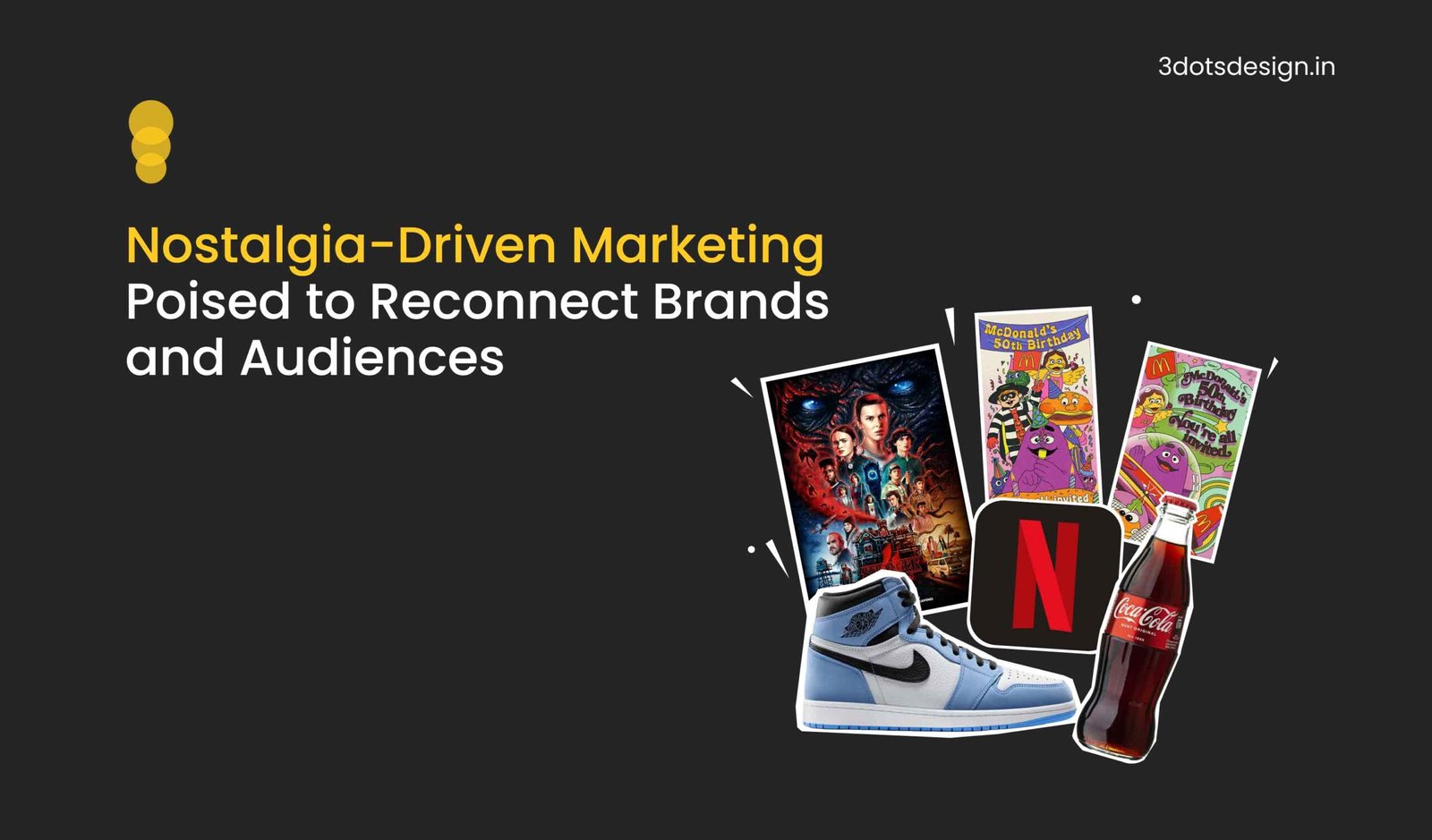
- Coca-Cola- Share a Coke revives personal names and old emotional rituals
- Nike – Air Jordan re-releases tap into legacy, culture, and generational pride
- Netflix – Stranger Things recreates 80s pop culture to build massive fan communities
- McDonald’s – Retro menu & characters bring back familiar tastes and memories
What is nostalgia-driven marketing?
Day after day, we are bombarded by fast content, short attention spans, and algorithms. To counter this, brands are reconnecting with audiences through shared memories, emotions, and cultural moments. It is called nostalgia-driven marketing.
Why nostalgia, and why now?
The world today feels uncertain. Economic shifts, technological overload, and constant digital stimulation have created emotional fatigue among consumers. Nostalgia offers comfort. It reminds people of simpler, safer, more familiar times.
Psychologically, it activates positive emotions like trust, warmth, and belonging. This is precisely why nostalgia-driven marketing is thriving right now. It offers emotional stability in an unstable environment.
What moments ignite nostalgia?
- Childhood routines, movies, music, and television
- Home-made food prepared by mother or grandmother
- Cultural milestones like festivals, sports wins, or iconic ads
- Early digital experiences such as old games, phones, or interfaces
- Personal life stages such as school days, first jobs, first love, or early family moments
How are marketers using nostalgia marketing?
Today’s marketers are blending old emotions with modern formats. They revive classic logos or packaging or reboot iconic campaigns with a digital twist. Social media reels, memes, throwback hashtags are popular tools.
Smart brands also blend nostalgia into storytelling and long-form content, including blogs, documentaries, podcasts, and brand films that explore their journey, evolution, and legacy.
Why does it perform so well?
Nostalgia works because consumers are more receptive when content feels familiar. Studies consistently show that nostalgic messaging improves brand recall, emotional engagement, and even purchase intent.
In digital marketing, nostalgic content often performs well organically. It encourages sharing, commenting, and tagging. People like to share memories, and algorithms reward that behaviour.
How can brands use it authentically?
Authenticity is critical. It carries forward the emotional core of what the brand has always stood for. When done right, it strengthens brand trust rather than appearing gimmicky.
Practical questions for marketers
For using nostalgia strategically, marketers should consider the following questions before launching a nostalgia-driven campaign.
- Which generation are we targeting, and what memories matter to them?
- Are we celebrating the past or escaping the present?
- Does this align with our current brand identity and values?
- How will this translate across platforms and formats?
Algorithmic dynamics and generational trends
Algorithms today favour engagement while generational trends decide how nostalgia is consumed. Millennials gravitate toward 90s and early-2000s memories, while Gen Z experiences ‘borrowed nostalgia’ through eras they never lived but feel emotionally connected to. This cross-generational appeal gives nostalgia marketing remarkable scale.
What is the Oasis Effect
The Oasis Effect refers to nostalgia acting as a mental break from constant digital noise. In a feed full of selling messages, nostalgic content feels like a pause or a moment of emotional relief, which is the Oasis. Brands that create this oasis earn affection and touch the heart.
The future of nostalgia-core
Looking ahead, nostalgia-core will evolve through immersive formats like AR, VR, and interactive storytelling. Data and AI will also play a role, helping brands personalise nostalgic triggers based on user behaviour and preferences. It will be about carrying emotional intelligence into the future.