
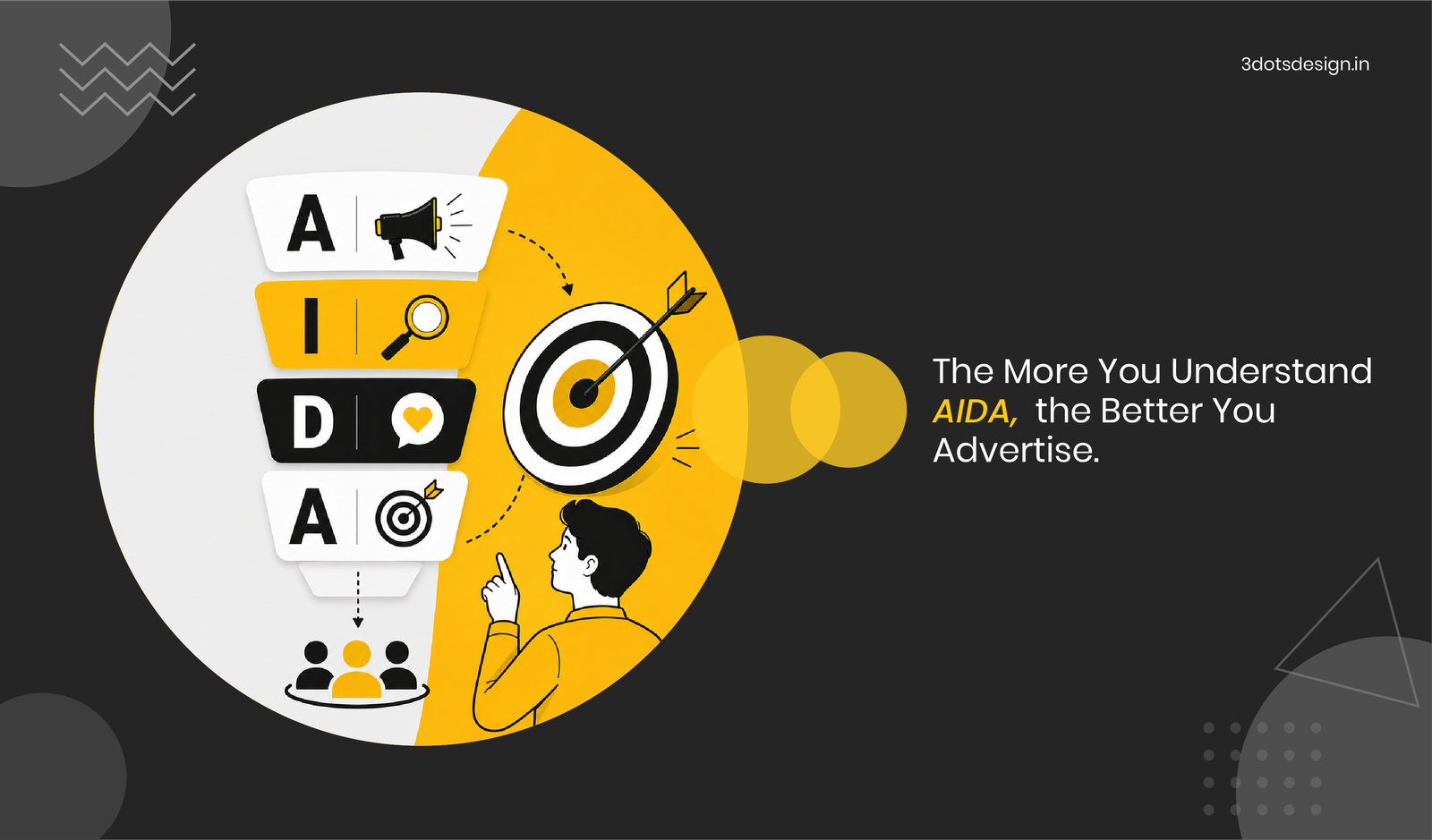
Advertising is about understanding what happens inside the audience’s mind after they see that message. One framework that helps explain this process is the AIDA model in advertising psychology.
AIDA stands for Attention, Interest, Desire and Action. It maps the psychological journey a consumer can go through—from first noticing a brand to taking a meaningful step towards it.
What Is the AIDA Model?
The AIDA model is a classic marketing framework that explains four key stages of consumer response:
- Attention – Get noticed
- Interest – Give people a reason to care
- Desire – Make them want the offering
- Action – Encourage them to respond
The model provides advertisers with a simple way to move consumers through the modern funnel, from awareness to conversion. However, today’s consumer journey is rarely completely linear.
People may discover a brand through social media, compare it online, read reviews, forget about it, see a retargeting ad and eventually make a purchase.
That is why modern advertising often combines AIDA with more evolved frameworks such as AISDALSLR, which accounts for additional stages such as Search, Liking, Sharing and Response.
1. Attention: Make Them Stop
Consumers are exposed to countless messages every day. An advertisement therefore has only a few moments to compete for attention.
Psychological triggers that can help create attention include:
- Unexpected visuals
- Strong headlines
- Contrast and colour
- Humour
- Curiosity
- Emotion
- Relevant cultural references
- A surprising statistic or statement
Tactical Execution
Attention can be generated through:
- Bold outdoor advertising
- Thumb-stopping social media creatives
- Strong video openings
- Powerful headlines
- Distinctive brand assets
- Unusual creative concepts
2. Interest: Give Them a Reason to Stay
Interest can be created by answering questions such as:
- What problem does the product solve?
- What makes it different?
- Why should the consumer care?
- What benefit does it offer?
- Is this relevant to their lifestyle?
3. Desire: Make Them Want It
Interest becomes desire when the consumer starts imagining the benefit as part of their own life.
Desire can be influenced by:
- Emotional storytelling
- Social proof
- Aspirational imagery
- Testimonials
- Exclusivity
- Personal relevance
- Demonstration of benefits
- Scarcity or urgency, when genuine
4. Action: Make the Next Step Easy
Even when consumers are interested and convinced, they may not act if the next step is unclear or complicated.
A strong call to action should therefore be:
- Clear
- Specific
- Easy to understand
- Relevant to the consumer’s intent
- Simple to execute
A consumer may:
See → Search → Compare → Review → Discuss → Revisit → Purchase → Recommend
This is where models such as AISDALSLR become relevant
Why AIDA Still Matters
It helps an advertising agency in Pune or anywhere else ask four fundamental questions before releasing a campaign:
- Will people notice it?
- Will they care about it?
- Will they want what we’re offering?
- Will they know what to do next?
It can also help identify weaknesses in existing campaigns. An advertisement may have excellent visuals but fail to create desire. Another may generate strong interest but lack an effective CTA.
Limitations of the AIDA Model
AIDA’s limitations include:
- Consumer journeys are rarely linear.
- People may enter the funnel at different stages.
- Brand awareness can continue after purchase.
- Recommendations and social sharing are not fully represented.
- Emotional and cultural factors can influence decisions unpredictably.
Therefore, AIDA works best when combined with consumer research, data, behavioural insights and modern digital marketing analytics.
We at 3 Dots Design, a reputed advertising agency in Pune, have the capabilities to transform an advertisement from a message into a mindful consumer journey. To explore our journey and brand partnership possibilities, get in touch.